
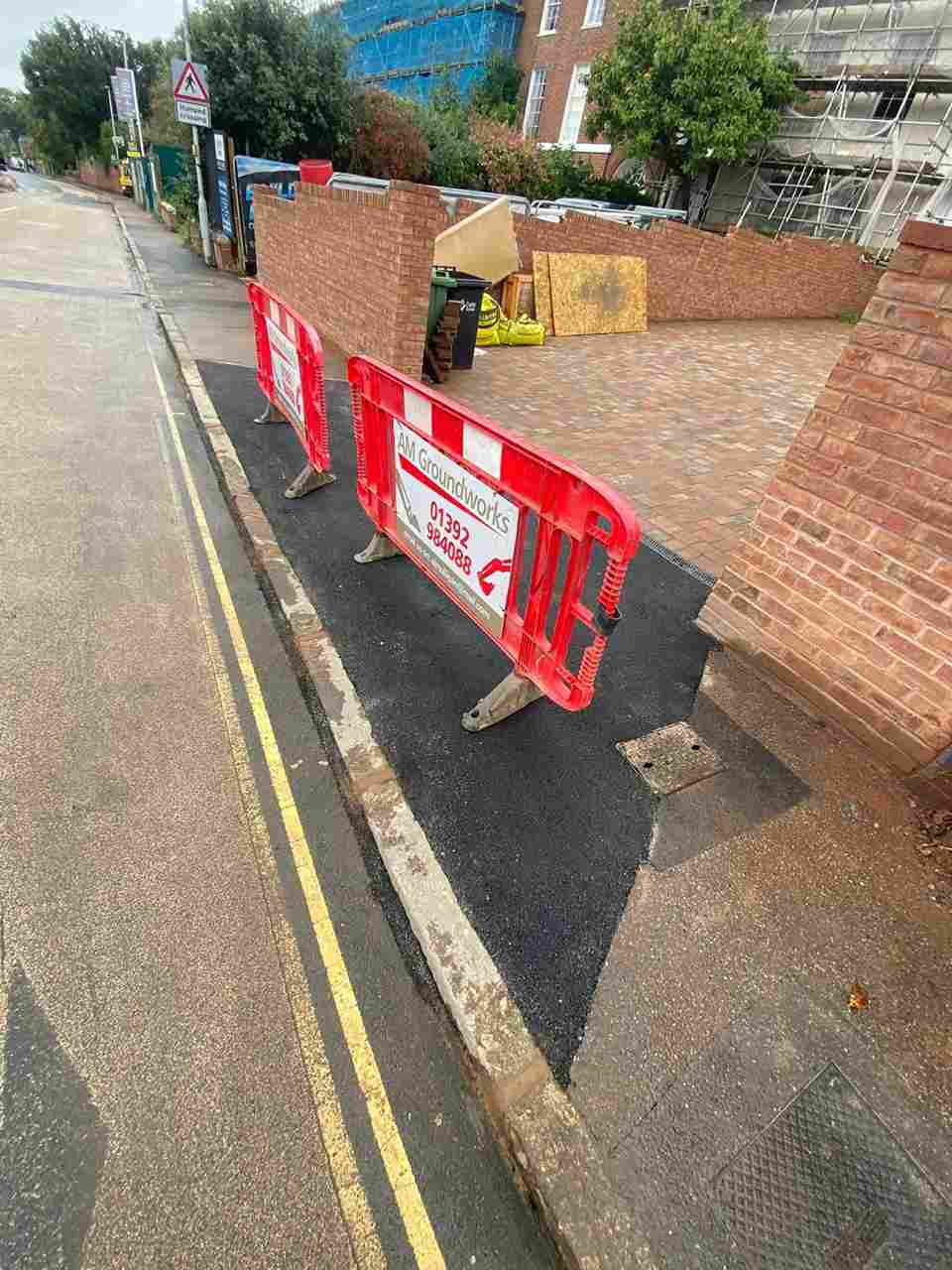
Yes, it can be illegal to park over a dropped kerb in the UK, especially where the kerb has been lowered for driveway access, pedestrians, wheelchair users, mobility scooters, pushchairs, or cyclists. Under the Traffic Management Act 2004, parking beside a dropped footway can be treated as a parking contravention in special enforcement areas, and councils may issue a Penalty Charge Notice. The Highway Code also says drivers must not stop or park where the kerb has been lowered to help pedestrians and mobility users.
Parking in the UK is already a national puzzle involving yellow lines, permit zones, tiny signs, angry neighbours, and councils waiting with ticket machines like patient predators. Add dropped kerbs into the mix, and the confusion gets worse.
So, is it illegal to park over a dropped kerb in the UK? In many cases, yes. Parking over a dropped kerb can be a parking contravention, especially when the lowered kerb is there to help vehicles enter a driveway, allow pedestrians to cross, or give access to wheelchair users, mobility scooters, pushchairs, and cyclists. The rule is not just about being polite, although that would be a shocking development in modern parking behaviour. It is about keeping access safe and clear.
A dropped kerb is part of the public highway. Even if it sits outside someone’s house, the road space itself does not automatically belong to that homeowner. However, if you block a legally installed dropped kerb, you may be causing an obstruction and could receive a Penalty Charge Notice from the local council.
The law is not always applied in exactly the same way everywhere. Some councils enforce dropped kerb parking actively, while others may only take action after a complaint. But the basic message is simple: if a kerb has been lowered for access, crossing, or mobility use, do not park across it.
A dropped kerb, also called a dropped footway or vehicle crossover, is a section of kerb lowered to road level. It allows easier access between the road and pavement.
Dropped kerbs are commonly used for:
A dropped kerb outside a driveway allows a vehicle to cross the pavement legally and safely to reach private property. A dropped kerb at a crossing point helps pedestrians move between the pavement and road without stepping down from a high kerb.
This matters because blocking one can stop people entering or leaving their property, make roads less accessible for disabled people, and force pedestrians into unsafe positions. All because someone wanted a “quick parking spot”. Truly, civilisation at its finest.
The main law in England and Wales is section 86 of the Traffic Management Act 2004. It states that, in a special enforcement area, a vehicle must not be parked on the carriageway next to a footway, cycle track, or verge that has been lowered to meet the level of the road for specific purposes. Those purposes include helping pedestrians cross, helping cyclists enter or leave the road, or helping vehicles enter or leave the carriageway across the footway.
In plain English, if the kerb has been dropped for access, you should not park across it.
The Highway Code also supports this. Rule 243 says drivers should not stop or park where the kerb has been lowered to help wheelchair users and powered mobility vehicles.
There is also council-level enforcement. For example, some local authorities explain that parking across a dropped kerb can lead to a Penalty Charge Notice, especially where access is obstructed. Richmond Council says the Traffic Management Act 2004 enables councils to take enforcement action against drivers parked in front of dropped footways.
Parking over a dropped kerb in a driveway can be illegal or enforceable as a parking contravention, especially if it blocks access to or from the property.
A driveway dropped kerb is usually installed to allow vehicles to cross the public footway into private land. If you park across it, you may prevent the resident or business from entering or leaving.
Many councils treat this as “parking adjacent to a dropped footway”, often known as contravention code 27. Enforcement may depend on whether the dropped kerb is shared, whether the resident complains, and whether the vehicle is blocking access.
Some councils may not issue a ticket automatically for every dropped kerb obstruction. Others act when the property owner reports the obstruction. This is why one driver may get fined in one borough while another seems to escape elsewhere. Not because the universe is fair, but because council enforcement is inconsistent, as tradition requires.
This is where the rules become slightly less simple.
In many areas, councils may allow a resident to park across their own residential dropped kerb, as long as they are not blocking a pedestrian crossing point, cycle access, shared access, or causing danger. Some councils will not enforce against a vehicle parked across a private driveway dropped kerb if the resident has given permission.
However, you should never assume this applies everywhere. Council policies vary. Havering Council, for example, explains that parking across a dropped kerb may be treated as a contravention unless the driver has permission from the property owner using that dropped kerb.
The important point is this: you cannot park across every dropped kerb just because you think it is harmless. Pedestrian dropped kerbs and shared access points are different from your own driveway access. If the dropped kerb is for wheelchair users, pushchairs, or crossing pedestrians, permission from a householder is irrelevant.
If the dropped kerb is at a crossing point or designed to help pedestrians, wheelchair users, mobility scooters, or pushchairs, you should not park there.
This type of dropped kerb is not private driveway access. It exists for public safety and accessibility. Blocking it can force disabled people, parents with prams, and pedestrians into the road at unsafe points.
Councils are often stricter with pedestrian dropped kerbs than residential driveway dropped kerbs. East Suffolk Council explains that Rule 243 of the Highway Code tells drivers not to stop or park where the kerb has been lowered to help wheelchair users and powered mobility vehicles.
So, if the dropped kerb is part of a pedestrian crossing route, the answer is simple: do not park there. The kerb is not decorative. It is not a personal parking invitation from the pavement.
Yes, you can receive a Penalty Charge Notice for parking over a dropped kerb. The fine amount depends on the local authority and whether the penalty is paid within the discount period.
In many areas, the contravention is enforced by civil enforcement officers. The PCN may be issued if your vehicle is parked next to the lowered section of the kerb and blocks access.
Some councils say the vehicle does not need to block the entire dropped kerb. Kingston Council, for example, states that a vehicle does not have to be fully obstructing the dropped kerb to be committing a parking contravention; if any part of the vehicle is physically over the point where the footway meets the carriageway, it may be considered a contravention.
That means even partial blocking can be a problem. Your bumper hanging over the dropped section may be enough. Cars, tragically, do not become invisible just because only the back end is in the way.
In some cases, yes. If a vehicle is causing a serious obstruction, especially where access is blocked, the council or police may have powers to remove it. This depends on the local enforcement rules, the circumstances, and the level of obstruction.
A car is more likely to be removed if:
Most cases involve a PCN first, but removal is possible in more serious situations.
Parking opposite a dropped kerb is not automatically illegal in the same way as parking directly across it. However, it can still cause problems if it prevents vehicles from entering or leaving a driveway safely.
For example, if the road is narrow and your car is parked directly opposite someone’s driveway, the property owner may struggle to reverse out or turn in. This may be treated as an obstruction in some circumstances, especially if access is genuinely blocked.
The safest approach is simple: do not park in a way that makes access difficult. Radical concept, I know.
You can usually park near a dropped kerb as long as you are not blocking the lowered section, the access route, visibility, or a restricted area. However, you should leave enough room for vehicles, pedestrians, wheelchair users, and cyclists to use the dropped kerb properly.
Some councils focus on the flat lowered section rather than the sloped taper on either side. East Suffolk Council notes that enforcement is usually carried out when a vehicle is parked over the part of the footway that is level with the carriageway, while the sloped tapered area is not normally enforceable on its own.
Still, parking right up to the edge of a dropped kerb can be inconsiderate and may make access awkward. If in doubt, leave more space. Paint and bodywork are expensive. Arguments with neighbours are free but exhausting.
You can still be fined for parking over a dropped kerb even if there are no yellow lines. Dropped kerb enforcement does not always require road markings or signs.
This surprises many drivers because they assume “no yellow line” means “free parking”. Sadly, the parking law was not designed for emotional simplicity.
Dropped kerbs, pedestrian crossings, school entrances, zig-zags, bus stops, permit zones, and access restrictions can all affect where you can park. Yellow lines are only one part of the wider system.
If someone parks across your legally installed dropped kerb and blocks your access, you can usually report it to your local council. Many councils have online forms for dropped kerb obstruction.
You may need to provide:
Some councils will only act if the property owner or occupier complains. Others may enforce proactively in certain areas.
If the vehicle is causing a dangerous obstruction or blocking emergency access, the police may be relevant, especially where the issue goes beyond civil parking enforcement.
If you have a driveway but no dropped kerb, the situation changes. A driver parking across the entrance may be inconsiderate, but enforcement can be harder because there may be no legal vehicle crossover.
In many places, you are not allowed to drive over the public pavement to reach a driveway unless there is an authorised dropped kerb. The pavement is part of the highway, and driving across it without permission can damage slabs, underground services, kerbs, and utility covers.
If you want legal vehicle access, you normally need to apply to your local council for a dropped kerb. A and M Groundworks can support groundwork-related preparation where suitable permissions and local authority requirements are in place.
Do not just lower the kerb yourself. Councils tend not to enjoy DIY surgery on public highways. They become strangely alert when people start modifying public infrastructure with enthusiasm and poor judgment.
No, not in the casual “weekend project” sense. A dropped kerb usually needs council approval because it affects the public highway. The work often has to be carried out by the council’s approved contractor or a contractor who meets specific local authority requirements.
You may need permission if:
You may also need planning permission in some cases, especially if the property is on a major road, in a conservation area, or if the front garden must be changed for vehicle access.
No. A short stay can still block access, and councils do not usually issue PCNs based on whether your errand was emotionally important.
“There Are No Yellow Lines, So I Can Park There”
No. Dropped kerb restrictions can apply even without yellow lines or signs.
The homeowner may not own the road, but the dropped kerb exists for access. Blocking it can still be enforceable.
Not necessarily. Even partial obstruction may be enough for enforcement in some areas.
Not always. It depends on the type of dropped kerb and local policy. You should not block pedestrian crossing points, shared access, or places needed by wheelchair users and cyclists.
The safest way to avoid a fine is to avoid parking across dropped kerbs altogether. Revolutionary, yes, but effective.
Before parking, check:
If the answer to any of these is yes, find another space.
So, is it illegal to park over a dropped kerb in the UK? In many situations, yes. Parking over a dropped kerb can lead to a Penalty Charge Notice, especially where the kerb is used for driveway access, pedestrian crossing, wheelchair access, mobility scooters, pushchairs, cyclists, or shared vehicle access.
The Traffic Management Act 2004 gives councils powers to enforce against parking next to dropped footways in special enforcement areas, and the Highway Code tells drivers not to park where the kerb has been lowered for accessibility.
The most sensible rule is also the simplest: if the kerb is lowered, do not block it. It may only look like a small section of pavement, but for someone trying to leave their driveway, cross safely, or move with a wheelchair or pram, it matters.
Parking is stressful enough without turning one lazy decision into a fine, a complaint, or a neighbourly feud performed through curtains.
Yes, parking over a dropped kerb can be a parking contravention in the UK. Councils can issue a Penalty Charge Notice if the vehicle blocks a lowered kerb used for access, pedestrians, cyclists, or mobility users.
Some councils may allow you to park across your own residential dropped kerb if it only serves your property and causes no obstruction. However, local rules vary, and you must not block pedestrian or shared access dropped kerbs.
Yes, in some council areas, even partial obstruction can lead to a fine. If any part of the vehicle blocks the lowered section where the footway meets the road, it may be treated as a contravention.
You can report the vehicle to your local council, usually through an online parking enforcement form. Provide the vehicle registration, photos, location, time, and details of how access is blocked.
No, dropped kerb restrictions can apply even when there are no yellow lines or parking signs. The lowered kerb itself can be enough for enforcement if it is blocked.