
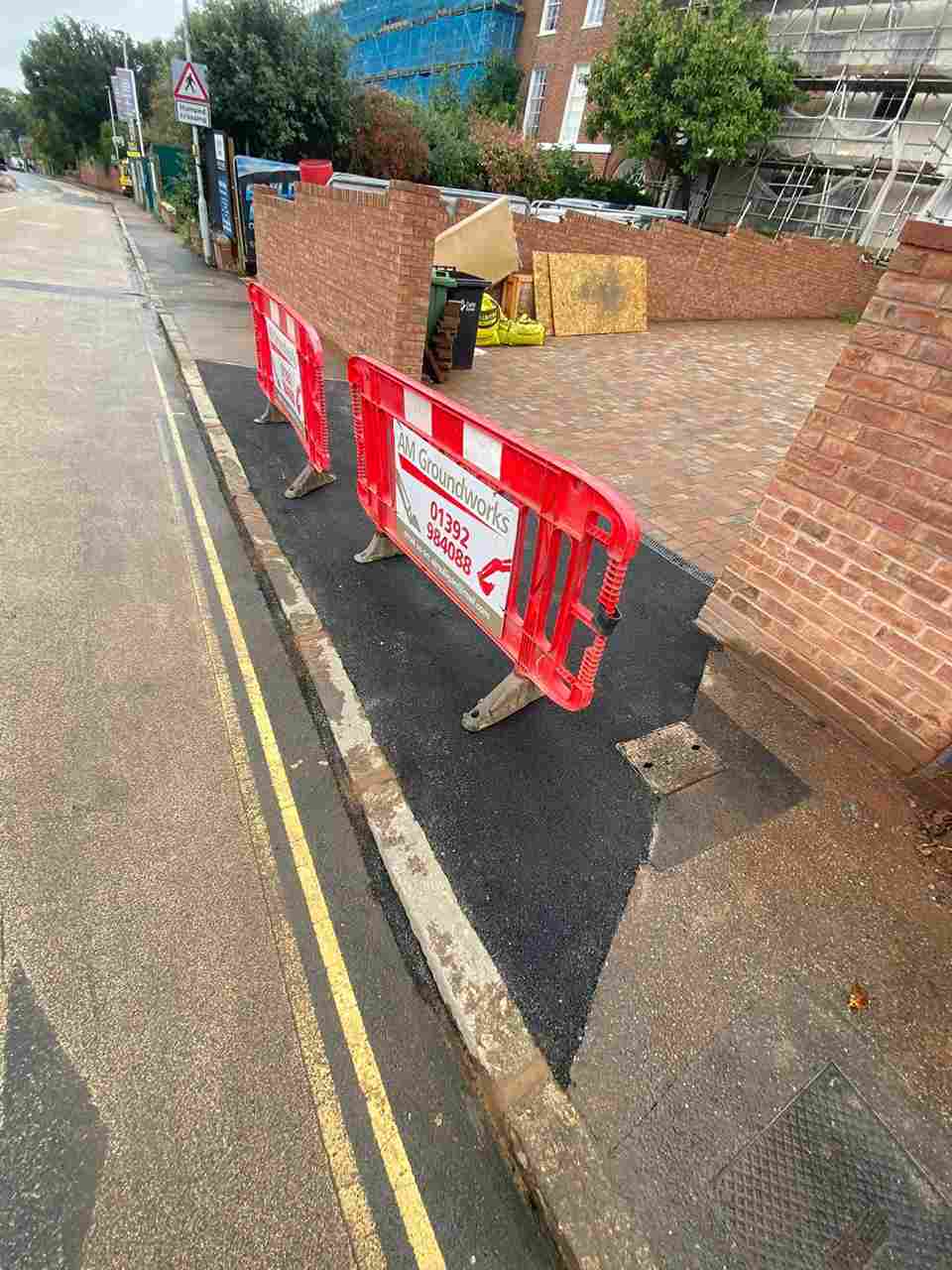
A dropped kerb is a section of the pavement with lower edges, which is usually installed in front of your driveway for legal movement of the vehicle. Most homeowners are concerned about the cost of installing a dropped kerb.
Getting a free dropped kerb is not common, but in certain situations, under council rules and subsidies, it can be possible to get a free dropped kerb. This blog will help you understand the eligibility criteria for a free dropped kerb and how you can apply for it.
A dropped kerb is also known as a vehicle crossover and is essential for safe driving from your driveway to the road while following legal requirements and considering pedestrian safety. A dropped kerb is needed:
Free dropped kerb installations are very rare in the UK, and you can avail them only in certain circumstances defined by the council rules. Some of the circumstances by which you can be eligible for financial assistance and a waiver are:
If any of your family members are disabled, then you can apply for a free dropped kerb through the Disabled Facilities Grant (DFG), and the local council will pay the whole cost of the dropped kerb necessary for accessibility.
If the local council is part of a major road development program or house regeneration, then they may build the dropped kerb in front of your home as part of the project, but it is not common in the UK.
The local council can provide financial assistance or funds for installing a dropped kerb according to their policies or criteria, if you are living in a council-owned area or in a housing association property.
The approval of a free dropped kerb depends on the property suitability, highway council requirements and relevant funded scheme. Every council has different requirements and conditions for property suitability, but meeting these requirements does not guarantee a free dropped kerb. Some of the common requirements for a dropped kerb installation are:
First of all, you must check whether you require planning permission. Even if you do not require planning permission, you must have the approval of the highway authority. Contact your relevant council for approval.
Bradford Council says that you must apply for permission before installation. In contrast, Oxfordshire County Council says that they are responsible for permitted construction or alteration, and Kingstone Council says that the council will do all the work.
It is important to be the owner of the property while applying for a dropped kerb. If you are not the owner, then you need your owner’s permission and have to submit the owner’s consent to your council for approval.
Bradford and Oxfordshire councils both require the owner’s consent for an application, while Kingston council says the same thing for tenants.
Effective drainage is important to stop surface water run-off to the road during rainfall. Meet the minimum parking space size requirements given by your council while considering the drainage system.
Bexley Council mentions that if your parking space is more than 5 square metres, then you must install a permeable surface and a soakaway. At the same time, Bradford mentions the minimum parking space with a 6metre depth and a 2.75 metre width.
The dropped kerb must be away from any junctions, traffic signals and roundabouts for driving safety. Every council has proposed its specific distance, which must be considered before planning or installing a dropped kerb.
Bradford Council clarifies that the dropped kerb must be 15 metres away from the junction, while Bathness Council states that it must be 10 metres away from the junction, but if there is a classified road in front of the property, then it must be 15metres.
Street furniture, trees, utility equipment and other features can affect whether a dropped kerb is feasible. A council can assess whether to move features and whether it is safe to install a dropped kerb without moving them.
Bathness Council in the UK says that there should not be trees, streetlights, columns or telegraphs that can affect access within 1 metre of a proposed dropped kerb. At the same time, Bradford Council also mentions that there should be no conflict between a dropped kerb and street furniture.
You may have to pay the whole cost, from getting permission to installing a dropped kerb on your own, if you are not qualified for any council scheme or subsidised policies for funding. The typical cost for a dropped kerb includes:
An application for a dropped kerb may include checking the eligibility criteria, knowing whether you require planning permission or not, submitting an application and getting approval. The step-by-step process of applying for a dropped kerb includes:
For a dropped kerb, you must have enough driveway space so that your vehicle does not obstruct the footway, and it should be wide enough that you can easily open or close the doors of the vehicle.
For a normal street dropped kerb, you may not need any planning permission, but if you want access from a classified road, then proper planning permission is usually required.
Once you have checked the eligibility criteria and planning permission, search for your relevant council authority and understand the basic rules required for the construction of a dropped kerb.
Submit the application to your council authority via an online portal or by submitting a physical form while paying a non-refundable application fee.
The council authority will assess your site and approve your application. After approval, they may construct the dropped kerb or ask you to hire a reliable contractor to start construction.
You cannot install a dropped kerb using public property on your own because it has legal requirements and must follow local council rules. The consequences you may have to face for installing a dropped kerb without permission include:
If your dropped kerb application is refused, you will get a refusal notice with complete details of the reasons behind the refusal, and you should reconsider those to get approval. The application may be refused if your dropped kerb:
A dropped kerb is a section of the pavement with lower edges for driving a vehicle without any damage to public property.
An approved contractor from the council authority usually installs a dropped kerb.
The overall cost for a dropped kerb depends on its location, the size of the area and proximity and includes application, construction and contractor fees.
Blue badge holders are not automatically eligible for a free dropped kerb because it entirely depends on local council policies.
You may need permission or advice from the relevant authority before applying for a dropped kerb, especially if you have trees that you do not want to remove during the construction.
A dropped kerb is a part of the pavement in front of your property which is usually constructed with lower edges for safe or legal driving. A dropped kerb is constructed according to the local council policies to avoid any legal penalty.
There are certain circumstances and schemes of local councils to get a free dropped kerb. If you want to start your groundwork project along with a dropped kerb and are looking for a reliable contractor, you can contact A and M Groundworks for reliable construction and building solutions for both private and public projects.